

Energy Optimization of Fluidized-Bed Granulation
Referenzen
Utilize waste heat. Reduce natural gas consumption.
Heat Recovery for Fluidized-Bed Granulation
400 kW of compressor waste heat used to preheat process air—reducing CO₂ emissions by about 400 metric tons per year.
| Project Data | Description |
|---|---|
| Location | Weißandt-Gölzau, Saxony-Anhalt |
| Operator | IPT-Pergande Gesellschaft für Innovative Particle Technology mbH |
| Investment in Centralized Compressed Air Generation | Approx. €2 million |
| Commissioning of the central compressed air supply | 2023 |
| Application | Fluidized-bed granulation and drying |
| Process air flow rate | 30,000 m³/h |
| Heat requirement for process air preheating | 800 kW |
| Natural gas consumption before optimization | Approx. 4 million kWh/year |
| Direct CO₂ emissions before optimization | Approx. 800 metric tons/year |
| Waste heat capacity utilized | 400 kW |
| Natural gas savings | Approx. 2 million kWh/year or up to 50%* |
| CO₂ reduction | Approx. 400 metric tons per year |
Utilize waste heat. Cut natural gas consumption in half.
At its Weißandt-Gölzau facility, the Pergande Group uses waste heat from the central compressed air generation system to preheat the process air for a fluidized-bed granulation plant. The heat recovery system provides 400 kW of thermal output and reduces direct CO₂ emissions by approximately 400 metric tons annually.
Task
The fluidized-bed granulation plant in question requires a process air flow rate of 30,000 m³/h. Heating this air requires 800 kW of thermal output. Prior to the optimization, annual natural gas consumption was approximately 4 million kWh, resulting in direct CO₂ emissions of about 800 metric tons.
At the same time, waste heat was generated during compressed air production, which was released unused into the environment via recooling systems. The goal was to integrate this heat into the process air supply and reduce natural gas-based heat generation accordingly.
Technical Implementation
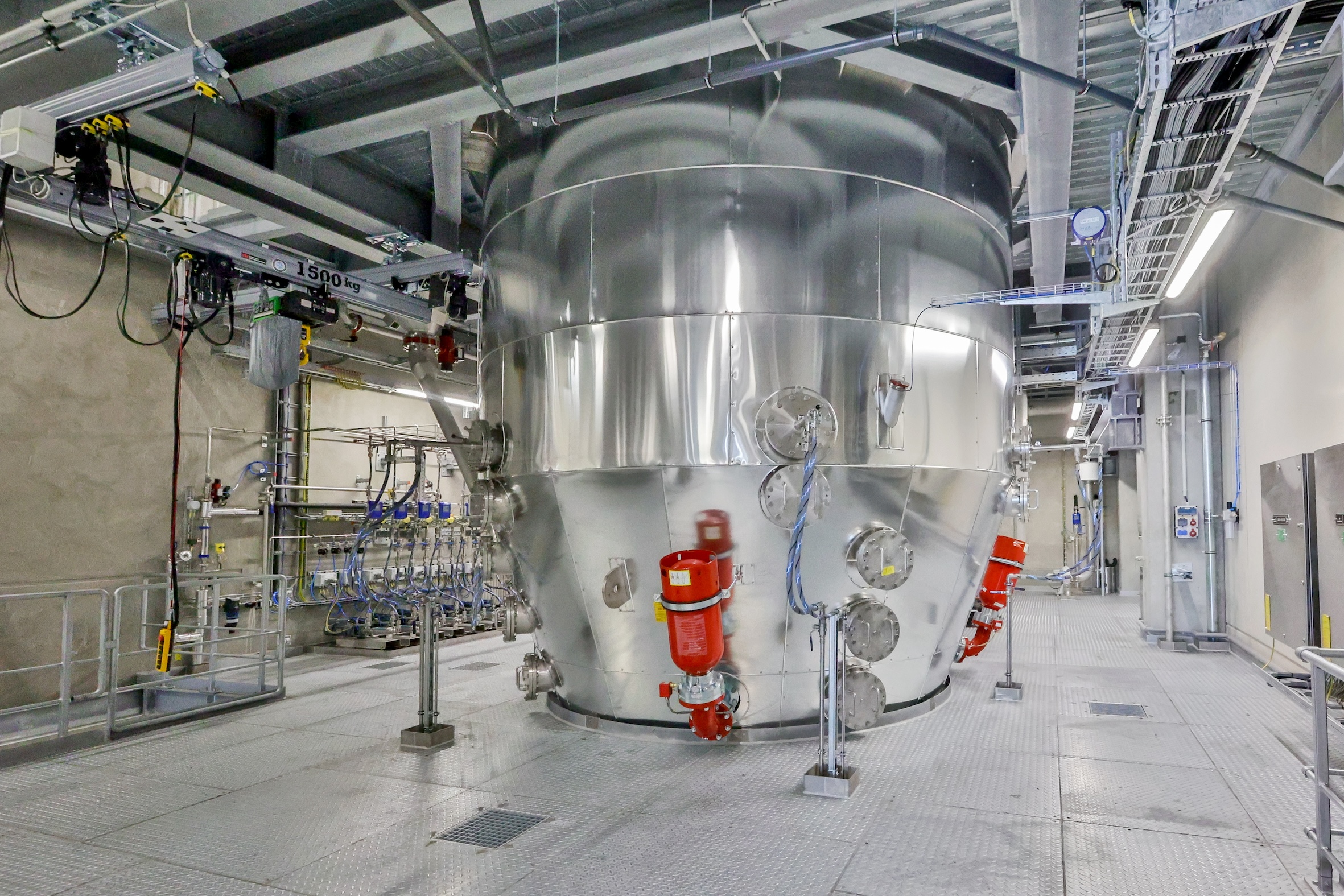
With an investment of approximately €2 million, Pergande centralized compressed air generation at the site. Since 2023, a central compressed air station has been supplying the production facilities via a shared network.
Waste heat from the compressors is captured via a water circuit and fed into a heat storage tank. A heat exchanger transfers the recovered heat to the process air of the granulation plant. At 400 kW, waste heat recovery covers half of the required heat demand. The conventional heat supply provides the remaining capacity and supplements the supply when waste heat availability fluctuates.
Results and Further Development
The natural gas consumption for the process air preheating system in question can be reduced by approximately 2 million kWh annually. Direct CO₂ emissions thus drop from about 800 to 400 metric tons per year. At the same time, operating costs are reduced through the use of an existing heat source.
Further expansion plans include connecting additional production facilities and integrating other heat sources. In addition, Pergande is working with research partners on a digital twin of the site to analyze material and energy flows and identify further efficiency potential.
The savings relate to the process air preheating under consideration and depend on the availability of waste heat, plant utilization, and operating parameters.